If you rely on a private well in Northeast Georgia, you are likely familiar with the distinctive challenges of regional groundwater. Fixtures develop stubborn reddish-orange rings, white laundry gradually turns yellow, and morning tap water may carry an unpleasant metallic smell and taste. These issues stem directly from local geology. North Georgia’s bedrock is rich in iron-bearing granite, quartz, and mineral deposits beneath our signature red clay. As rainwater percolates through the soil into deep subterranean aquifers, it dissolves naturally occurring iron deposits. When your well pump draws this water into your home, that dissolved mineral load comes with it. Left unaddressed, iron causes more than just cosmetic frustration. Over time, it coats the inside of your plumbing, restricts water flow, fouls water heaters, and stains expensive porcelain and tile. Fortunately, understanding the exact type of iron present in your supply allows you to implement the right iron filters for water and protect your plumbing for the long term.
Signs You Have an Iron Problem in Your Home
Because groundwater percolates through iron-rich soil, metamorphic rock, and deep granite formations, iron naturally dissolves into regional aquifers. You may notice several telltale symptoms around your home:
- Stubborn Reddish-Orange or Brown Staining: Unsightly rust rings around sink drains, toilet bowls, bathtubs, tile grout, and outdoor fixtures.
- Discolored or Dingy Laundry: White clothing and linens emerging from the wash with a yellow, orange, or dingy grey hue.
- Harsh Metallic Taste and Odor: Tap water, coffee, tea, and cooked foods carrying a distinct “pipe” or metallic flavor.
- Clogged Fixtures and Sluggish Flow: Aerators, showerheads, and appliance intake valves accumulating gritty sediment or slimy deposits that restrict water pressure.
- Premature Appliance Wear: Water heaters, dishwashers, and washing machines experiencing premature heating element failure and internal buildup.
The Three Common Forms of Iron in Well Water
Before investing in water treatment equipment, it is critical to determine which type of iron is entering your home. Treating the wrong form of iron with the wrong equipment is the leading reason filtration systems fail.
Clear-Water Iron (Ferrous Iron)
Ferrous iron is completely dissolved in groundwater where oxygen levels are low. When you pour a glass of water straight from the tap, it appears crystal clear. However, once exposed to air in a glass, sink, or toilet bowl, the iron oxidizes into insoluble particles, turning yellow, red, or brown over several minutes or hours. Clear-water iron is the most common form found in Northeast Georgia wells.
Red-Water Iron (Ferric Iron)
Ferric iron is already oxidized before it reaches your faucet. Water drawn from the well immediately exhibits a cloudy, reddish-brown, or amber appearance with visible suspended particles. This particulate iron settles at the bottom of containers and rapidly stains anything it touches.
Iron Bacteria and Organic Iron
Iron bacteria are naturally occurring microorganisms that feed on dissolved iron and manganese. They produce a sticky, reddish-brown slime that coats the inside of toilet tanks, well casings, and pipes, frequently accompanied by a musty, swampy, or decaying organic odor. Organic iron occurs when iron binds with dissolved organic matter or tannins, creating a tea-colored tint that resists standard filtration.
Why a Standard Water Softener Is NOT an Iron Filter
A widespread misconception among homeowners is that a standard water softener can resolve an iron issue. While both systems treat mineral-related water concerns, their internal mechanics and intended purposes are fundamentally different. For true, long-lasting iron elimination, a dedicated, whole-house iron filtration system is required. Water softeners operate strictly via ion exchange designed to capture calcium and magnesium ions (the minerals responsible for water hardness). Inside a softener tank, microscopic polystyrene resin beads hold sodium or potassium ions. When hard water passes through, calcium and magnesium swap places with the sodium ions and bond to the resin.
The Dangers of Using a Softener for Iron Removal
- Resin Fouling: While a softener may capture small traces of dissolved ferrous iron (typically under 2 to 3 parts per million), iron does not release cleanly during standard salt brine regeneration. Over time, oxidized iron forms an impermeable crust around the resin beads, permanently stripping their exchange capacity and ruining the resin bed prematurely.
- Inability to Filter Ferric Iron: Insoluble ferric iron particles do not undergo ion exchange; instead, they act as physical grit that clogs the softener’s internal riser tubes, distributor baskets, and control valve passages.
- Bacterial Slime Accumulation: Softeners cannot neutralize iron bacteria. The organic slime coats the resin beads, causing channeling (where water bypasses the resin entirely) and harboring unpleasant bacterial odors.
The Definitive Fix: Metro Water Filter’s Air Oxidizing Filox Iron Filter
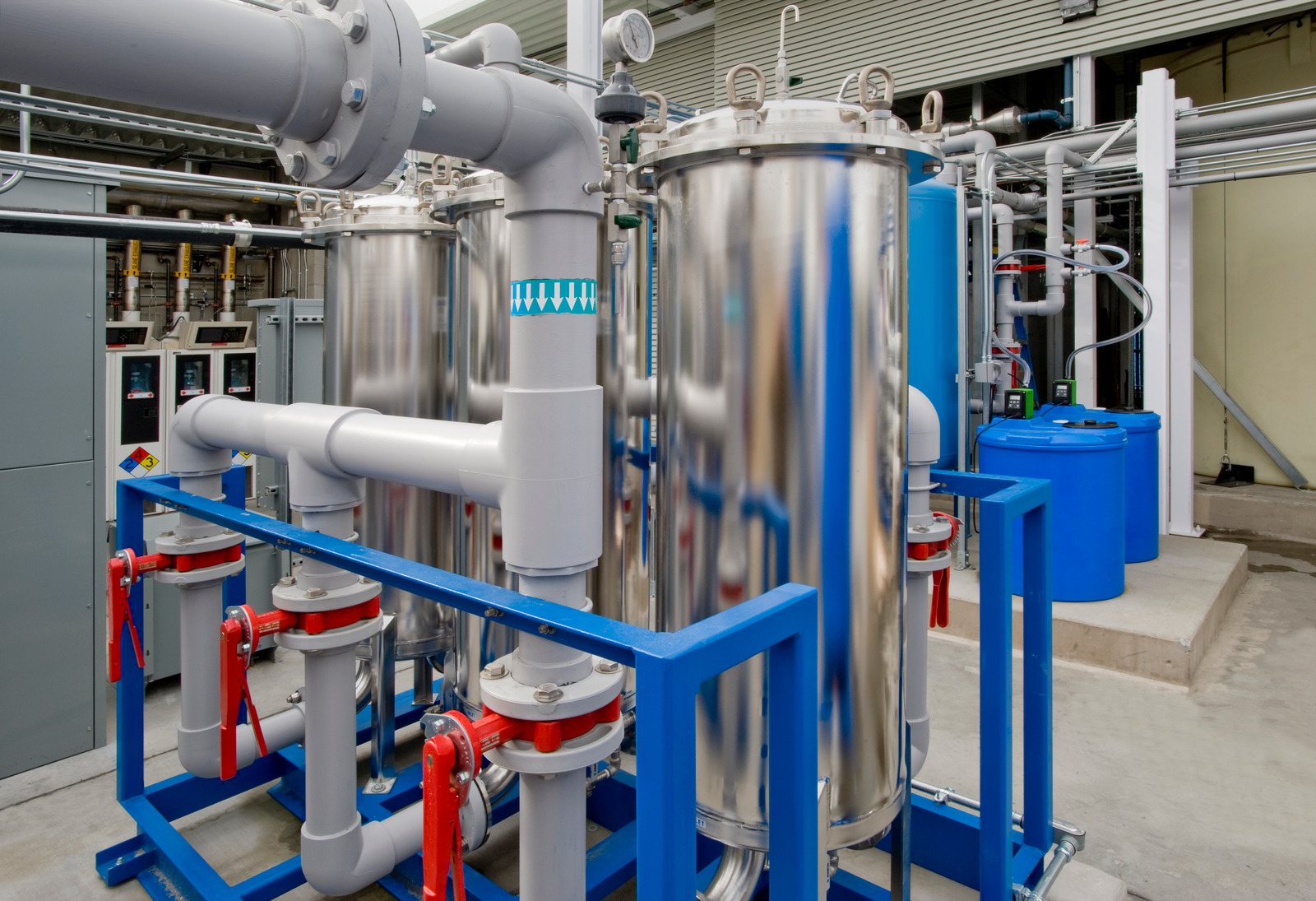
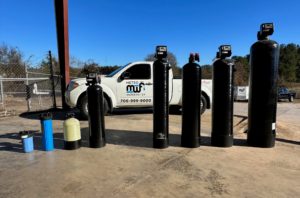
At Metro Water Filter, our primary recommendation for robust, whole-house iron removal is the Air Oxidizing Filox Iron Filter (Air Drawn Iron/Sulfur Filter). Engineered specifically to conquer heavy mineral loads without requiring harsh chemical additives, this system provides unmatched reliability and water clarity.
How the Air Oxidizing Process Works
The Air Oxidizing Filox system utilizes an advanced single-tank aeration design:
- Internal Compressed Air Pocket: During its nightly regeneration cycle, the system draws clean atmospheric air into the top portion of the tank, establishing a pressurized air chamber.
- Instant Oxidation: As raw well water enters the tank, it cascades through this compressed air pocket. Dissolved ferrous iron and hydrogen sulfide (sulfur/rotten egg odor) are instantly oxidized into solid, filterable particles.
- High-Capacity Media Capture: The oxidized particles pass directly into the dense bed of Filox media below, which traps the contaminants throughout the entire depth of the filter bed.
- Automatic Daily Backwash: The electronic control valve automatically initiates a vigorous clean-water backwash, flushing all captured rust and particulate matter down the drain without needing chemical regenerants.
Why Solid Filox Media Outperforms Generic Knock-Offs
Many generic or low-cost iron filters on the market rely on inferior filter media that quickly degrade under North Georgia water conditions. By utilizing solid manganese dioxide Filox media, Metro Water Filter ensures your system delivers continuous, high-flow water treatment that withstands severe well water fluctuations. Metro Water Filter builds our systems with premium Filox media, providing distinct advantages over common alternatives:
- Premium Filox Media (Metro Water Filter Standard): Solid ~80% manganese dioxide core. Delivers superior catalytic oxidation power and rapid reaction kinetics. Handles high iron concentrations (up to 15+ ppm) and sulfur odors concurrently. 100% chemical-free and engineered for a 10+ year operational lifespan.
- Generic Birm Media: Coated aluminum silicate core (< 2% active layer). Imposes strict operating limits, requiring high dissolved oxygen and a narrow pH range (> 6.8). Cannot tolerate hydrogen sulfide (sulfur smell destroys Birm immediately), and the thin active coating wears off rapidly.
- Greensand Plus: Coated silica core. Features a thin manganese coating that often requires periodic regeneration with toxic potassium permanganate (KMnO4) to maintain oxidation capacity.
- Lightweight Generic Katalox / Coated Media: Low-grade coated zeolite. Thinly coated lightweight granules easily strip and break down during regular backwashing, leading to bed exhaustion and iron breakthrough within 2 to 3 years.
The Metro Water Filter Difference: Independent, Service-First Expertise
Choosing the right water treatment provider is just as crucial as selecting the right equipment. For more than 30 years, and operating from our Lake Oconee headquarters since 2004, Metro Water Filter has served homeowners, farms, and commercial properties across North Georgia.
- Truly Independent Recommendations: We are an independent dealer, meaning we are never locked into proprietary equipment franchises. We select and build systems based purely on what your specific water analysis requires.
- Licensed Master Plumber Oversight: Installation Manager Wade Hensley is a licensed Master Plumber, guaranteeing every system is plumbed with precision, high-flow bypass valves, and code-compliant drain routing.
- Service-Heavy Commitment: With significantly more technicians in the field than sales representatives, our focus is on ongoing service, system maintenance, and honest customer relationships rather than high-pressure sales quotas.
Enjoy Pure, Stain-Free Water in Your Home
You do not have to live with rust-stained sinks, metallic tasting water, or damaged appliances. Whether you need an evaluation of an existing filtration unit or a comprehensive solution for your private well, Metro Water Filter is here to help. Contact our consultative team today to schedule your water quality consultation and discover the right iron filter solution for your home.